
The Dawn of “Modernity” in a Meiji-Era Studio Portrait
Updated: Aug 7, 2025
How a Wet Plate Photograph Captures a Changing Era

Recently, I came across an old glass photograph.It was tucked inside a paulownia wood box and dated to 1880, the 13th year of the Meiji era.The image shows a young Japanese couple in traditional clothing. What caught my eye was the woman wearing a head covering—something about her presence drew me in, and I decided to purchase the photo.
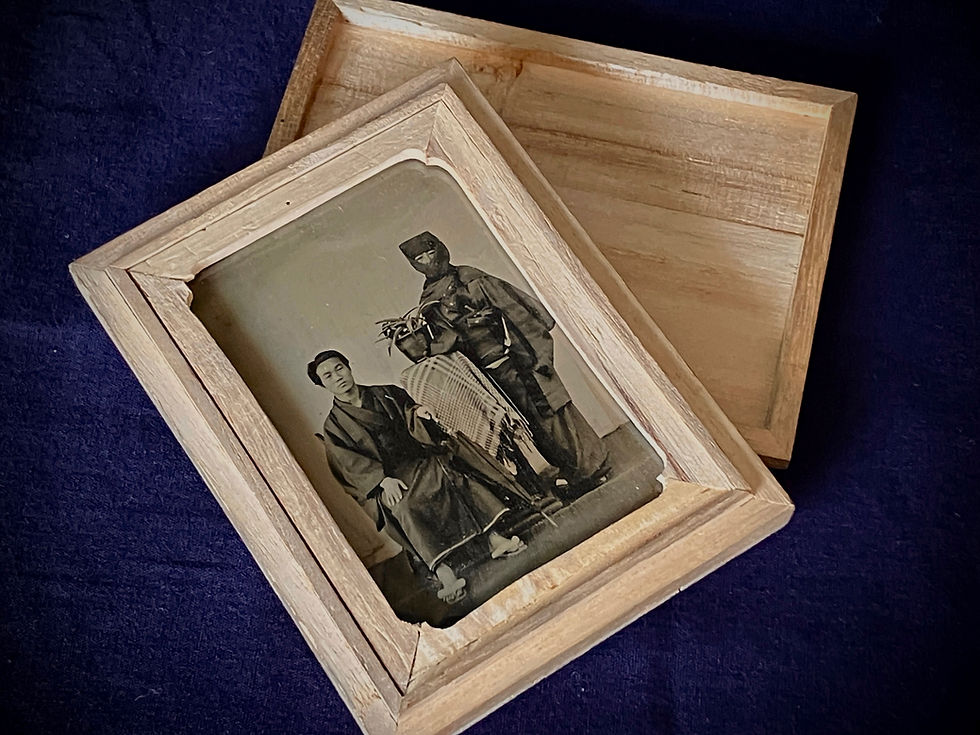
A Small Photograph, Full of Subtle Details
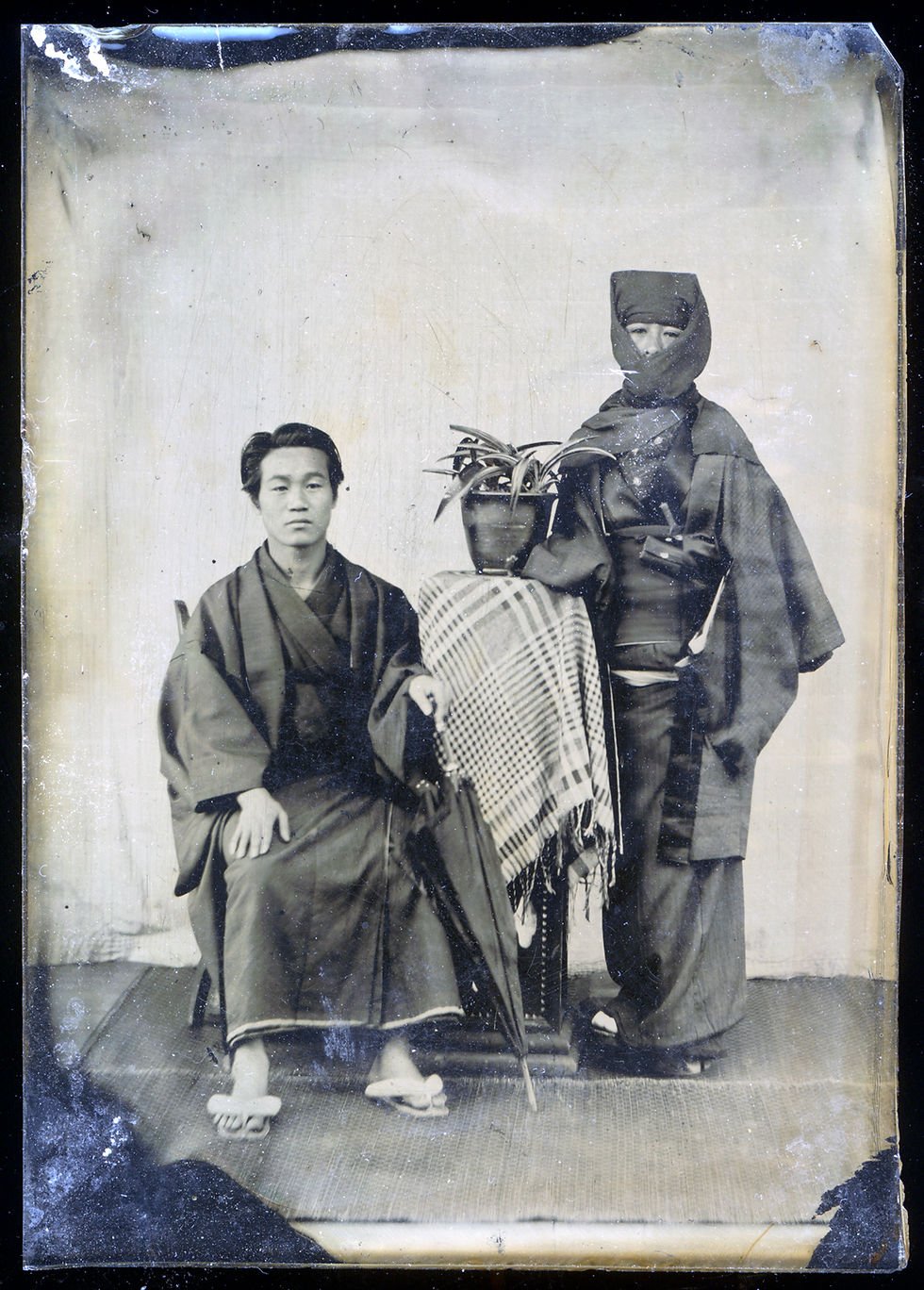
The photo is quite small, about the size of a cabinet card (8×10cm).At first glance, many details are easy to miss. But once I scanned and brightened the image, a fascinating scene began to emerge.
Looking closely, you can spot many intriguing elements.The man wears sandals with white straps and holds an umbrella. The woman’s head covering stands out as one of the most distinctive features. Around her waist, small decorative items dangle from her belt. A stand between them is covered with tartan fabric, and on top of it sits a houseplant that still looks familiar today.
Japan had long been closed to the world for over 200 years until the Meiji era began. Western influences arrived swiftly, reshaping everyday life. This photograph was taken in the midst of that transformation.
There’s an unmistakable blend of Japanese and Western influences throughout the image.
Between Tradition and the Modern World

The woman’s head covering immediately draws attention.
This type of veil is known as an okosozukin, which was commonly worn from the Edo period into the early Meiji era. It served practical purposes like warmth and modesty, but in this transitional time—when people were gradually shifting from kimono to Western dress—it may have also reflected a desire to hold onto traditional values.
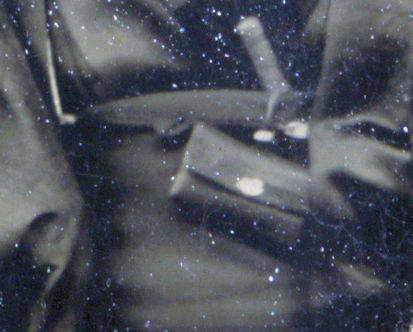
At the same time, a Western-style accessory pouch is clipped to her belt, intentionally visible alongside a folded fan. It’s likely that this ensemble was carefully chosen for the occasion—a look that felt fitting for the rare experience of having one’s portrait taken.

Turning to the man, his Western-style umbrella is hard to miss.
Back then, umbrellas like this were expensive luxury items. They weren’t just practical—they symbolized modernity and a Western lifestyle. Similarly, his white-strapped sandals were considered refined and high-status.


At the center stands a narrow pedestal draped in tartan fabric, likely imported. On top rests a Western-style houseplant-perhaps spider plant.
In early Meiji studio portraits, it was more common to see bonsai or vases with flowers.But here, the scene seems intentionally styled with a more Western feel.
The woman appears to be lightly resting her hand on the table—whether she actually was or it just looks that way, it suggests she stayed very still during the exposure.
What Does It Mean to Be Photographed?
Studio portraits in Meiji Japan were more than just keepsakes.They captured not only a person’s fashion or social status but also how they wanted to be seen—what kind of image they wished to project.
It’s unlikely the couple ever imagined they’d still be “seen” and talked about 145 years later.But that’s part of what makes photography so powerful.
It makes us wonder:What does it mean to be photographed today?And how do photographs continue to reflect the times in which they’re made?
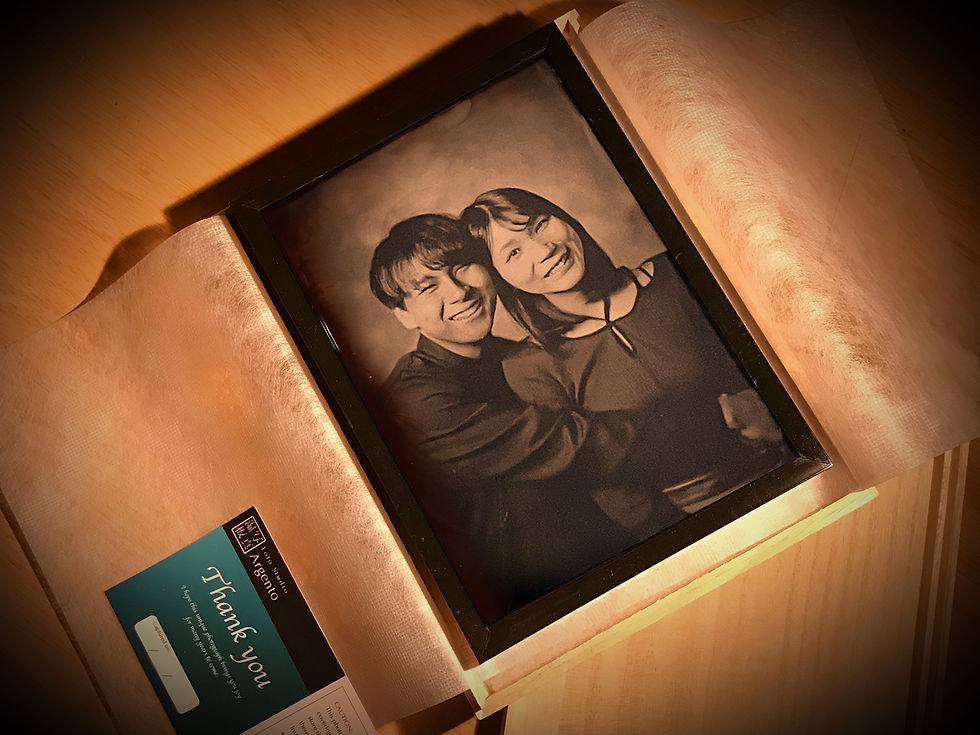
About the technique of wet plate photography → What is wet plate photography?
Learn more about wet plates → Wet Plate Journal (blog)
See the actual work → Gallery
Want to try photography or experience it? → Fees/Workshops


